Use the cash forecast
See your bank balance day by day for the next 30, 60 or 90 days, and spot a shortfall before it happens.
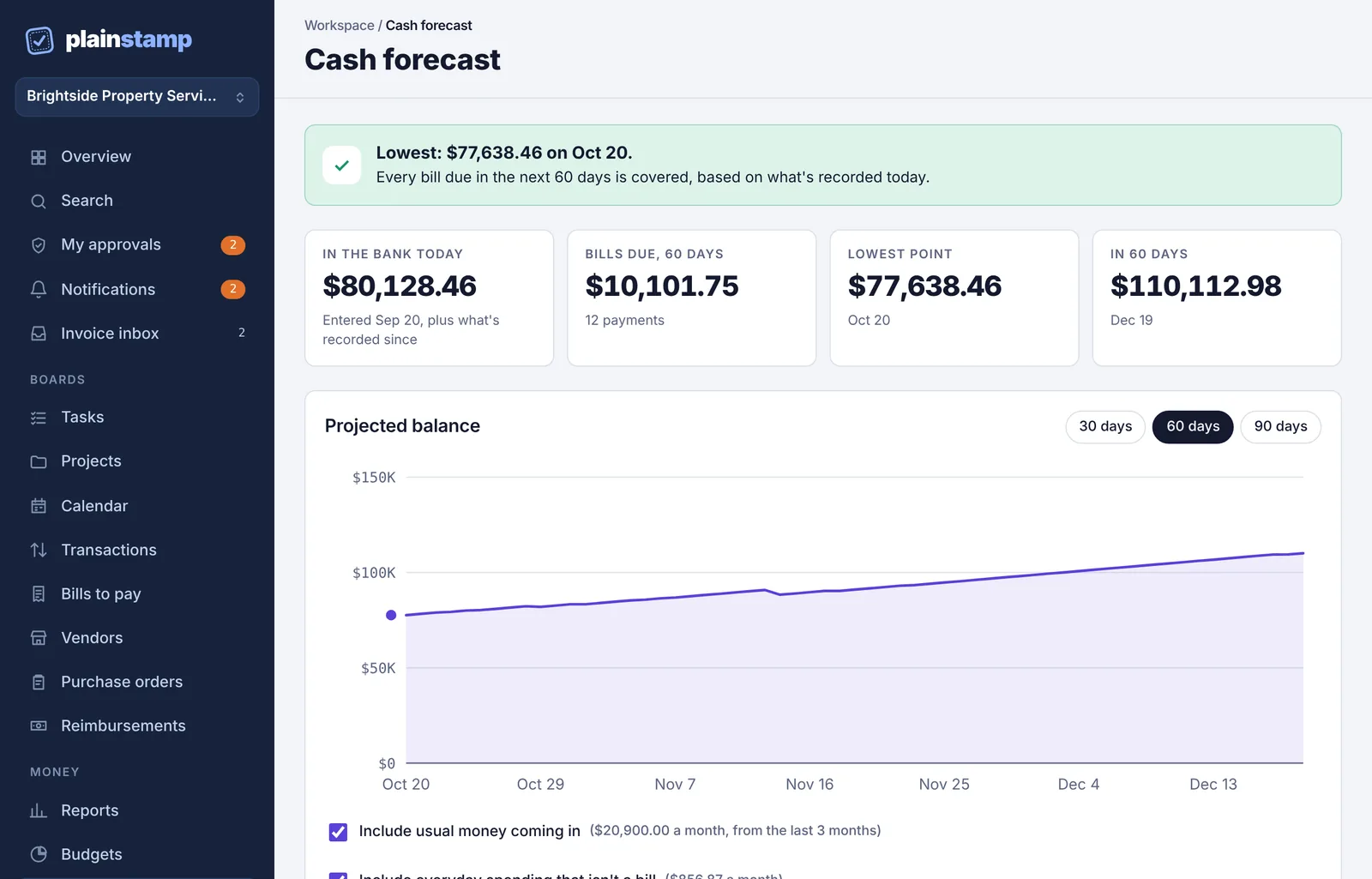
The Cash forecast starts from what's in the bank today, takes away each unpaid bill on its due date, adds your usual money coming in, and shows the balance day by day. If the balance would drop below zero, it tells you when and by how much.
Set it up: where the starting balance comes from#
The forecast needs to know what's in the bank today. It gets that in one of two ways:
A connected bank (best). If you've connected your bank on the Connections page, the forecast uses the current balance of your connected checking and savings accounts, added together. Credit cards, loans and lines of credit are left out. The balance stays up to date on its own. See Connect your bank account.
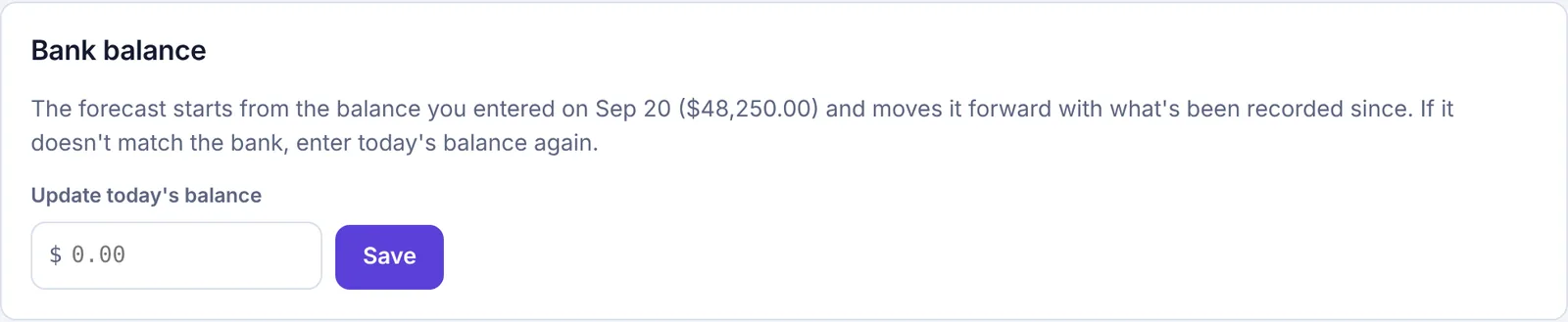
A balance you type in. If no bank is connected, type today's balance once:
In the menu, under Money, click Cash forecast.
Under Start with today's bank balance, type the amount in Today's bank balance.
Click Save.
When you type a balance, Plainstamp moves it forward by itself: each day it adds the money in and takes away the money out that you've recorded since that date. Under In the bank today you'll see "Entered (date), plus what's recorded since".
If the forecast's starting point drifts away from your real bank balance (for example, because some payments weren't recorded), enter today's balance again under Bank balance at the bottom of the page.
What's projected#
Unpaid bills, each on its due date. Bills that are already overdue count today and are marked Overdue. A bill with no due date also counts today. If part of a bill is paid, only what's left counts.
Monthly bills: bills set to Repeats every month come back each month, marked Expected, for the full amount.
Usual money coming in: your average money in per day over the last 3 months, spread evenly over the coming days.
Everyday spending that isn't a bill: your average day-to-day spending over the last 3 months (money-out transactions that weren't bill payments), also spread evenly.
Turn the last two on or off with the tick boxes under the chart: Include usual money coming in and Include everyday spending that isn't a bill. Each shows the monthly amount it's adding or taking away.
Read the page#
Pick how far ahead to look: 30 days, 60 days or 90 days (60 is the default).
Read the message at the top:
Green: "Lowest: (amount) on (date)." Every bill in that time is covered.
Red: "You'll be about (amount) short on the (day)." It also says the first day the balance drops below zero. Move a payment date, collect money owed to you, or move money in before then.
Check the four boxes: In the bank today, Bills due in that time, Lowest point and the balance at the end.
Scroll to Money going out to see each bill by date.
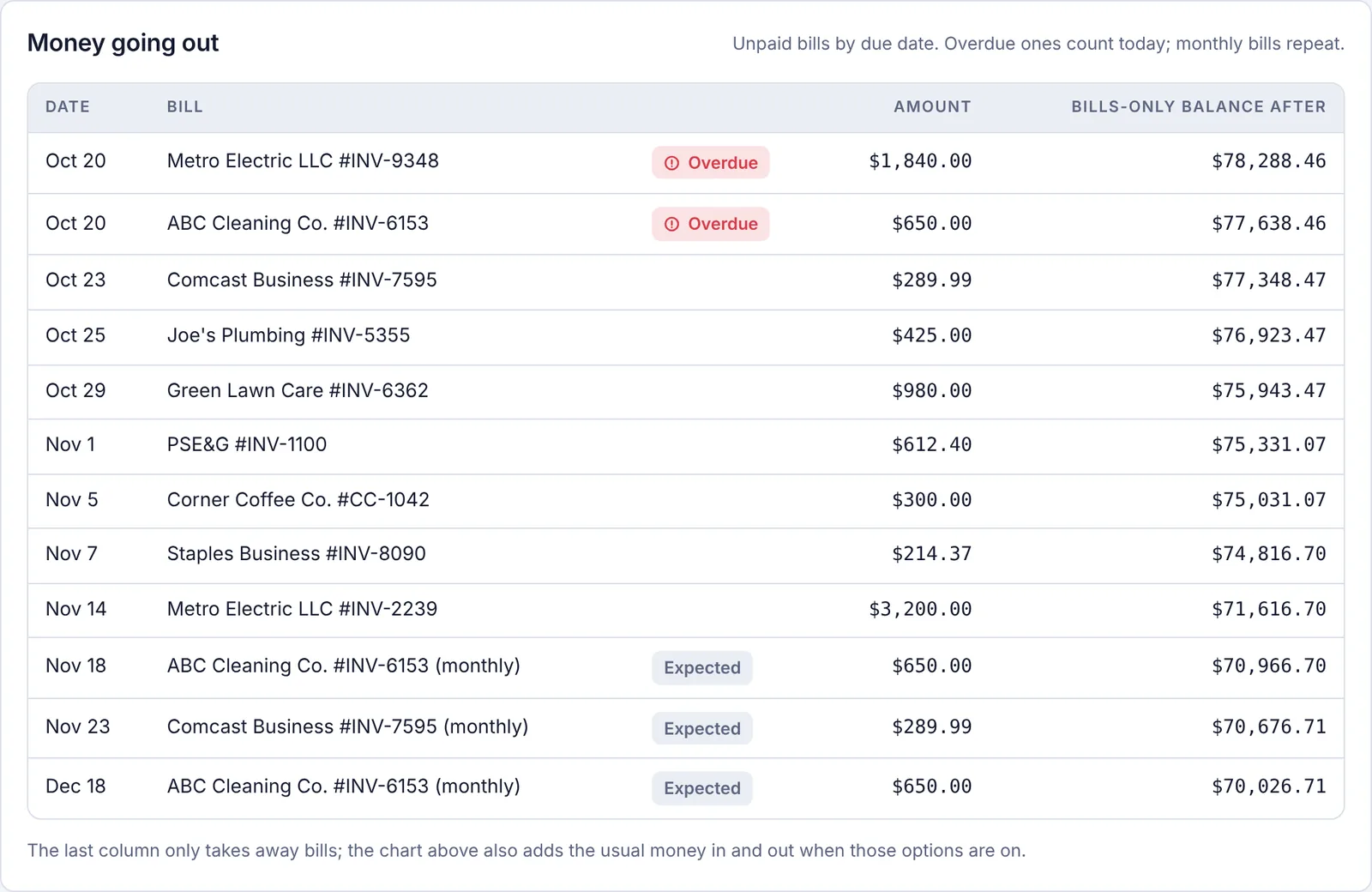
The Money going out table with overdue, upcoming and expected monthly bills
The last column, Bills-only balance after, only takes away bills. The chart above it also adds the usual money in and out when those boxes are ticked, so the two can differ.
The forecast card on Overview#
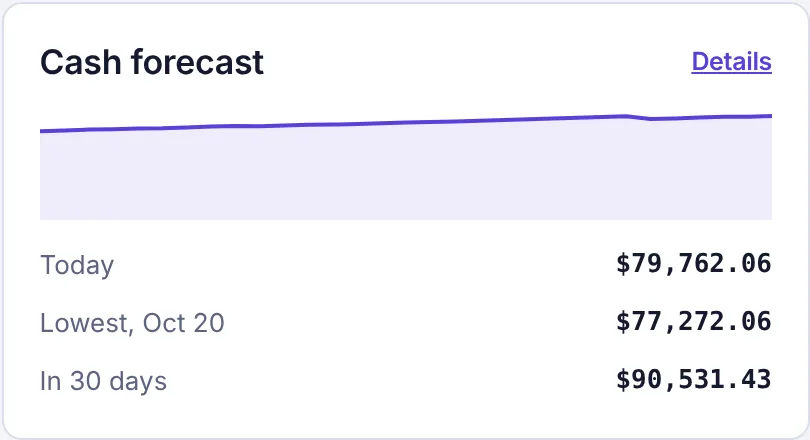
Owners, admins and accountants see a Cash forecast card on Overview. It always looks 30 days ahead and includes both usual money in and everyday spending. It shows Today, the Lowest point and its date, and the balance In 30 days, plus a warning if you'll be short. Click Details for the full page.
If no balance has been set yet, the card says "Enter today's bank balance or connect your bank to see the next 30 days" with a Set it up button.
Common questions#
The forecast is only as good as what's recorded. Bills you haven't added yet aren't in it. Add bills as they arrive (or forward them to your invoice inbox) to keep it accurate.
Can I add expected income, like a big payment coming in? Not one by one. The forecast uses your average money in. If you're expecting something unusual, keep it in mind when reading the lowest point.
Why does the chart go up even though I have bills? Your usual money coming in is larger than the bills in that period. Untick Include usual money coming in to see the bills on their own.